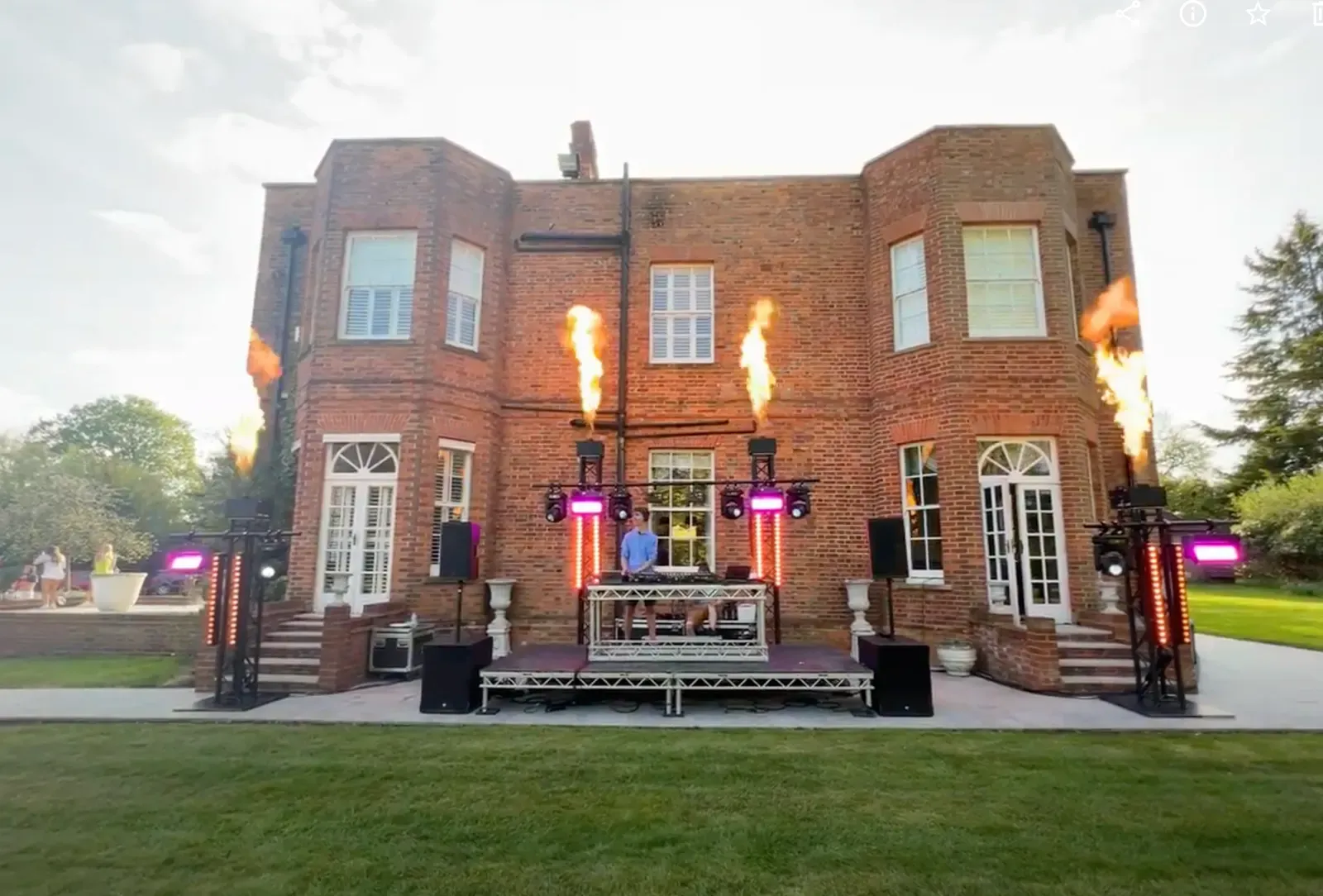
Special effects are the moments guests film. They are also the part of an event most likely to be refused by a venue, set off a fire alarm, or hurt someone if they are bought from the wrong place and run by the wrong people. This guide explains each effect we use, what the law and venues require, and how we run it. It is written so you can ask any supplier the right questions.
The one-line version: every effect needs a risk assessment, the venue's written agreement and a trained operator. If a supplier offers you any of these effects without mentioning all three, choose another supplier.
The effects, one by one
| Effect | What it actually is | Main risks | What it needs |
|---|---|---|---|
| Cold spark fountains (Sparkular and similar) | Titanium granules heated to produce a fountain of sparks that are cool by the time they land | Not pyrotechnic in the legal sense, but the unit is hot, the granules are metal, and the sparks will still trigger some detectors; falls and burns if guests walk into them | Risk assessment, venue agreement, safe zone around each unit, an operator firing on cue, never left unattended |
| Pyrotechnics (indoor and outdoor) | Regulated explosive articles: gerbs, mines, comets, and firework displays outdoors | Fire, burns, hearing, debris; storage and transport are regulated | A competent firer, a firing plan, venue fire officer sign-off, exclusion distances by category, and compliance with the Explosives Regulations for storage; outdoor displays add distance-to-audience rules and local notification |
| CO2 jets and cannons | Liquid CO2 released through a nozzle to produce a cold white plume | Asphyxiation in enclosed or low-lying spaces, cold burns from the nozzle and hoses, cylinders that must be secured | Ventilation assessment, cylinders chained upright, nozzles aimed above head height, operator control, never in a basement without air handling |
| Dry ice and low fog | Solid CO2 in hot water, or a chilled fog machine, producing fog that hugs the floor | Same asphyxiation risk at floor level where a child or a fallen guest would be, plus a wet, slippery floor | Ventilation, floor protection, a time limit per burst, trained handling of dry ice with gloves and insulated containers |
| Haze and smoke | Water- or oil-based particles that make light beams visible | Triggers smoke detectors; irritant for some guests at high density | Written detector isolation agreement with the venue and a fire watch, or a haze-free lighting design; low-density water-based fluid |
| Confetti and streamers | Paper or biodegradable pieces from cannons or blowers | Slip hazard on hard floors, fire load, cleanup | Flame-retardant certified stock, venue agreement on cleanup, kept away from candles and cold spark units |
| Lasers | Class 3B or 4 show lasers | Eye injury; regulated under laser safety guidance | A laser risk assessment, beams terminated above head height with no audience scanning, an operator and a display plan the venue has seen |
| Flame effects | Propane or liquid-fuel flame projectors | Real fire: burns, ignition of decor, gas cylinders | Almost always outdoor only, a trained operator, exclusion zones, fire extinguishers on hand, and the venue's fire officer in the loop |
The paperwork venues ask for
- A risk assessment and method statement for the effect, naming the product, the operator, the positions and the firing cues.
- Product data: the manufacturer's safety data sheet for cold spark granules, haze fluid and confetti, and the category and certification for any pyrotechnic article.
- Public liability insurance covering special effects specifically. Standard event cover often excludes pyrotechnics; ours does not.
- For haze and dry ice: a fire-detection isolation request in the venue's format, agreed with their duty manager or fire officer, and a fire watch while detectors are isolated.
- For outdoor pyrotechnics: notification to the venue, sometimes the local authority, and a distance plan showing the audience line.

What venues in London and Surrey typically say
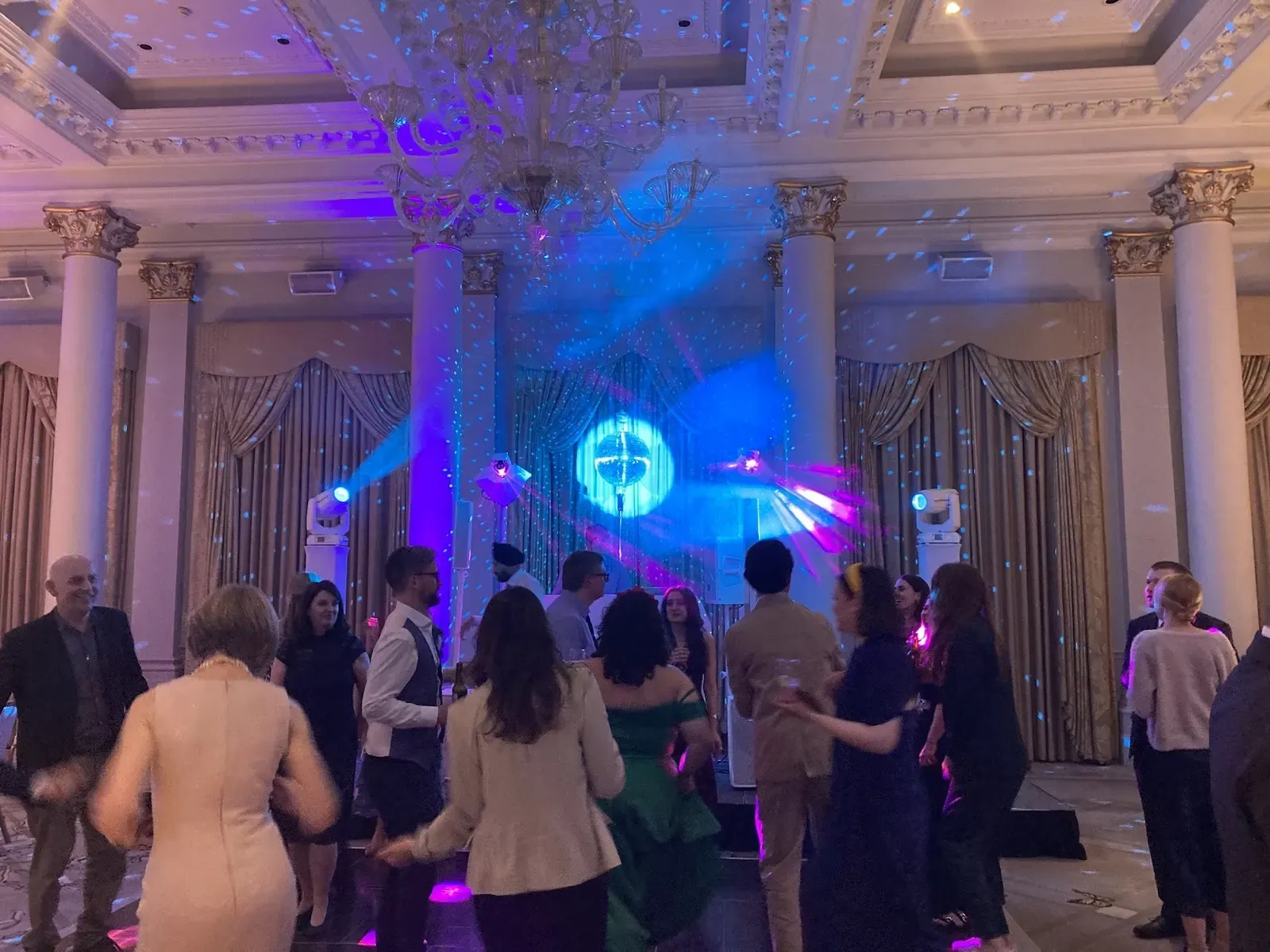
Hotels usually allow cold spark units and CO2 with a risk assessment, and haze with a supervised isolation. Heritage venues and museums often refuse haze and any effect near the fabric, and are right to. Country houses in Surrey and Berkshire generally allow outdoor effects on the lawn and are cautious indoors, especially under timber roofs. Marquees are the most permissive space, which is why the effects budget for a garden party goes further than for a ballroom, with the exception of anything involving flame near canvas. We ask the venue in writing before we promise an effect, and we design a version of the moment that works if the answer is no.
How we run an effect on the night
- Positions are marked on the floor plan and taped on the day, with a safe zone that the stage manager keeps clear.
- Every effect is fired by an operator on a cue from the show caller, never by the DJ or the host and never on a timer.
- A test fire happens before doors, with the venue present for anything that could trigger detectors.
- Guests are managed at the moment: a first dance with cold sparks has a clear floor; a CO2 reveal has nobody under the nozzles.
- Everything is made safe and removed at the end: cylinders off site, units cooled and cased, confetti swept, detectors restored and signed back to the venue.
Questions to ask any supplier
- Who is the operator on the night, and what is their training for this specific effect?
- Can I see the risk assessment before the event?
- Does your insurance name special effects, and can I see the certificate?
- Have you agreed detector isolation with the venue in writing?
- What is the version of this moment if the venue refuses the effect?
Effects sit inside a wider production plan rather than on top of it, which is why we scope them with the lighting design and the run-of-show rather than as a separate hire. The special effects service page lists what we carry; the wedding and private party pages show where each effect tends to be used.