
Event production management is the discipline of turning a brief and a venue into a show that runs on time, safely, without the host having to think about any of it. It is not event planning, which is about the guest experience, and it is not equipment hire, which is about kit. It sits between them: it decides what the technical build needs to be, who does what and when, and how the evening is called minute by minute. This guide sets out how we do it at VIVID, with the roles, the timeline, the documents and a real run-of-show, so you can judge any production company, including us, against it.
The roles on a production crew
| Role | Responsible for | When you meet them |
|---|---|---|
| Project lead (production manager) | The whole job: design, budget, venue liaison, crew, paperwork, the client relationship | From the first call to the final invoice; one named person |
| Technical or stage manager | The build, the crew on the day, the get-in and strike schedule, safety on site | Site visit onwards; runs the floor on the day |
| Show caller | Calling every cue from the run-of-show over comms: lights, sound, video, walk-ups | Rehearsal and the event; often the same person as the stage manager on smaller shows |
| Sound engineer | System design and tuning, the mix for speech and music, the stream feed if there is one | Sound check onwards |
| Lighting operator | Programming the states, running them to the running order | Focus session, then the event |
| Video operator | Playback, slides, LED wall content, camera and vision mixing on hybrid shows | Content check the day before, then the event |
| Riggers and crew chief | Truss, motors, points, anything that hangs; load-in and load-out labour | Get-in and strike |
| Stream producer | The remote audience on hybrid events: platform, chat, Q&A, remote speakers | Rehearsal and the event |

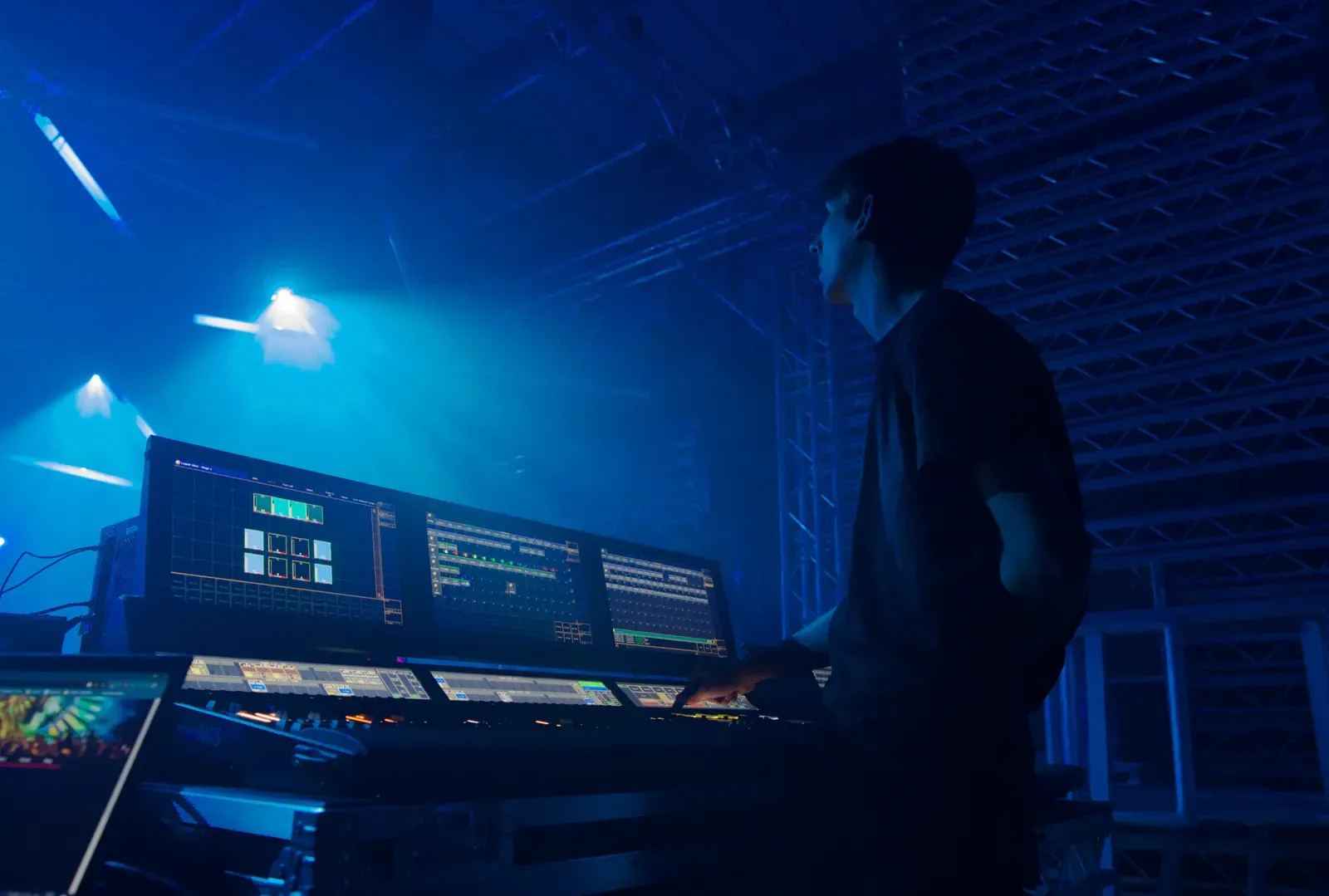
On a small private party the project lead, stage manager and show caller are one person and the operators are two. On a 500-person awards show they are twelve people with a clear chain of command. The size changes; the roles do not.
The twelve-week timeline
| Weeks out | Production milestones | What we need from you |
|---|---|---|
| 12 to 8 | Brief taken, site visit, technical design, specified quote | Venue confirmed, date, guest numbers, rough running order, budget range |
| 8 to 6 | Design signed off, kit and crew booked, venue technical pack requested, power and rigging plans drafted | Deposit, speaker and entertainment bookings confirmed |
| 6 to 4 | RAMS and method statement issued to venue, insurance certificates sent, content specifications sent to your designers | Brand assets, slide templates, any video content in progress |
| 4 to 2 | Running order locked, riders matched, crew call sheet issued, rehearsal scheduled | Final running order, speaker names and slides, seating plan |
| 2 to 1 | Content received and checked, cue sheet written, venue timings confirmed in writing | Final guest numbers, any changes |
| Event day | Get-in, build, checks, rehearsal, doors, show, strike | One decision-maker reachable on site |
| Week after | Recordings and photographs delivered, wrap report, invoice | Feedback, and the date for next year |
The documents that separate a production from a delivery
- Technical design and floor plan: where everything goes, drawn on the venue's plan, with sightlines and cable routes.
- Power plan: total load by circuit, distribution, generator sizing where needed, and what is on which supply so catering cannot trip the stage.
- Rigging plan: every hung item, its weight and its point, with the venue's load certification or our ground-support alternative.
- RAMS: the risk assessment and method statement the venue will ask for, covering the build, the show and the strike, plus any special effects.
- Crew call sheet: who arrives when, where they park, who they report to, and when they eat.
- Running order and cue sheet: the running order is the host's timeline; the cue sheet is what the crew do at each line of it.
- Content specification: pixel dimensions, aspect ratios, file formats and delivery deadline for every screen in the room, sent to your designers before they start.
If a quote does not come with a floor plan, a power plan and a named project lead, you are buying equipment delivery with people attached. That is fine for some events. It is not production management.
A real run-of-show
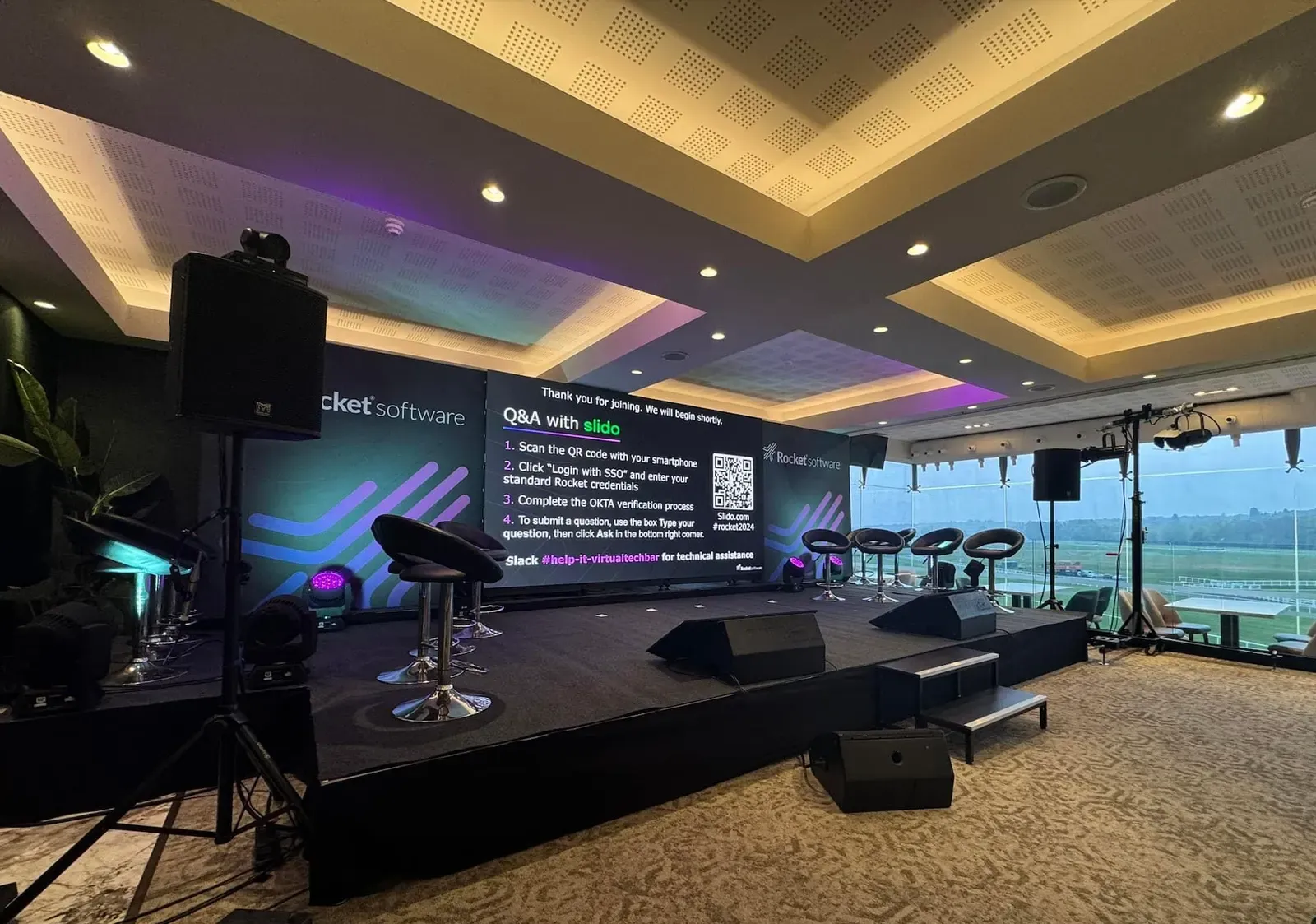
This is the shape of a run-of-show for a 200-guest corporate dinner with a keynote and awards in a central London hotel ballroom. The left-hand times are what the host sees; the cue column is what the show caller says over comms. Yours will differ; the structure will not.
| Time | What happens | Cue | Department |
|---|---|---|---|
| 13:00 | Crew call, loading bay opens | Get-in | All |
| 16:00 | Rig built and powered, LED wall content loaded | Systems check | LX, SND, VID |
| 16:30 | Sound check, lighting focus, presenter rehearsal with slides | Rehearsal | All |
| 18:30 | Doors: reception state, playlist at conversation level | GO reception | LX, SND |
| 19:25 | Guests seated; room state to dinner, walk-in music fades | Standby keynote | LX, SND, VID |
| 19:30 | Host welcome, keynote begins; key light up, slides live | GO keynote | LX, VID, SND |
| 19:55 | Keynote ends; applause bed, room to dinner state | GO dinner | LX, SND |
| 20:00 to 21:20 | Dinner service; background music, pin spots on tables | Hold | SND |
| 21:25 | Awards: walk-up music stings, category graphics, presenter key light | Standby awards, then GO per category | VID, SND, LX |
| 22:10 | Awards end; room state to party, DJ booth live | GO party | LX, SND |
| 23:45 | Last song; house lights to 50 percent | GO last song | LX, SND |
| 00:00 | Guests out; strike begins | Strike | All |
| 01:30 | Loading bay closed, room as found, venue sign-off | Out | All |

Where events go wrong, and what management prevents
- The get-in window was shorter than anyone told the crew. Prevented by confirming venue timings in writing two weeks out and building a schedule with slack.
- The keynote slides arrived on a USB stick at 6 pm in the wrong aspect ratio. Prevented by a content specification sent to designers early and a content deadline 48 hours before.
- Catering tripped the power to the stage during the reveal. Prevented by a power plan that puts stage and kitchen on separate supplies.
- The host's brother-in-law changed the running order on the night. Managed by a show caller who takes changes from one named decision-maker and re-cues the crew calmly.
- The venue's fire alarm went off during the first dance because of haze. Prevented by a written isolation agreement with the venue, or a haze-free design.
How to buy production management
Ask for a named project lead, a floor plan and a power plan with the quote, and a run-of-show before the event. Ask who calls the show. Ask what happens if the venue's internet or the generator fails. A production company that answers those five questions without hesitation is one you can leave alone on the night, which is the entire point. Our event production pages set out how we approach corporate events, weddings and private parties; the cost guide explains what the crew lines in a quote actually buy.