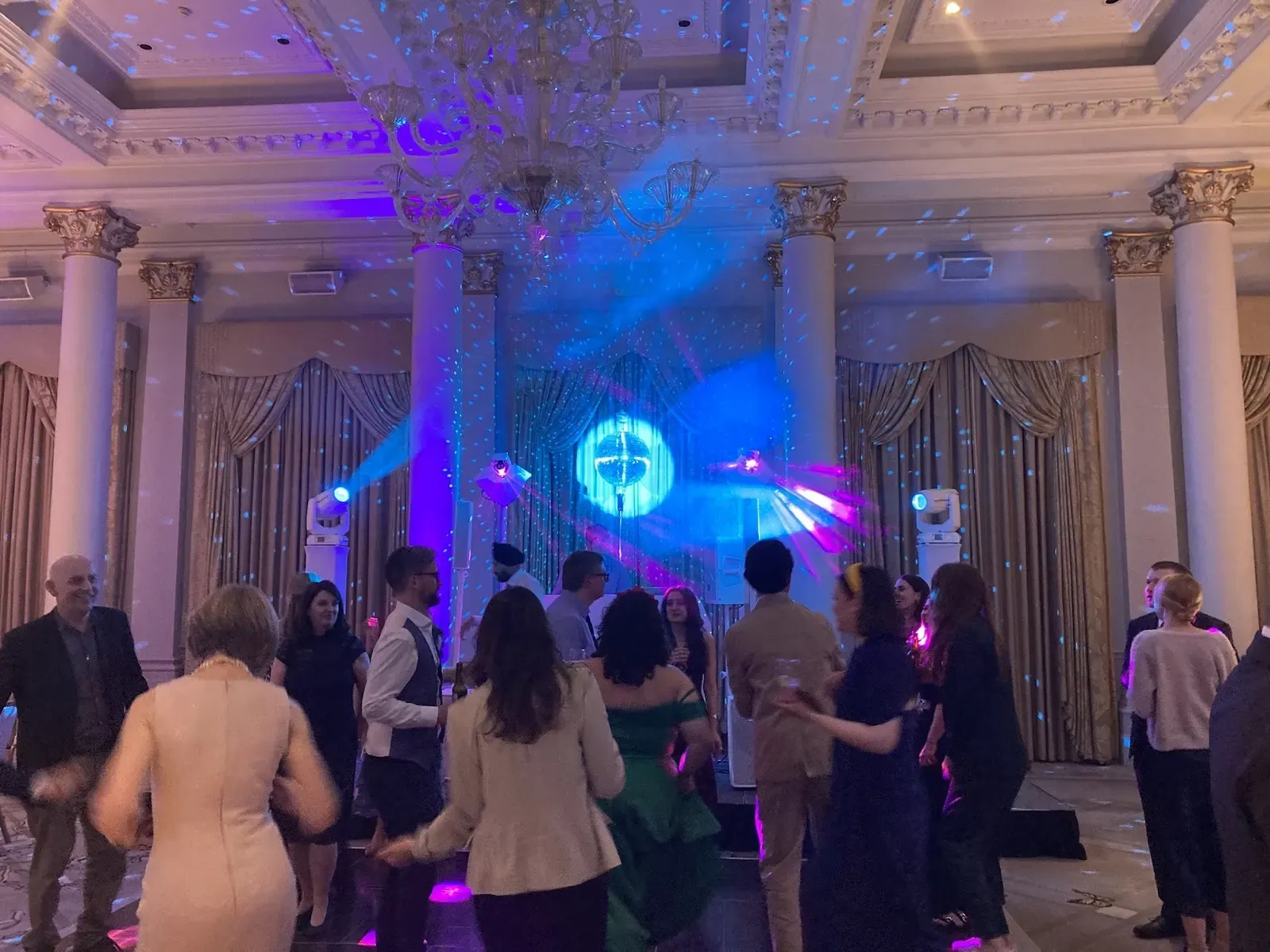
A luxury private event is really three things layered on top of one another: a guest experience, a logistics exercise, and a creative brief. Get any one of them wrong and the other two start to suffer. This guide is written from the production side of the table — the people who sit between the host's vision, the venue's rules, and the crew on the ground at 4am. It covers how far out to start, what the bigger budget lines actually buy you, which decisions only you can make, and where a production partner like VIVID earns their fee. It is aimed at hosts, private offices and event managers planning something between 50 and 400 guests in London or the Home Counties.
Start with the experience, not the equipment
The most common planning mistake we see is leading with a shopping list — an LED wall, a DJ, a flame machine — before the guest journey has been mapped. The list is easy to write and satisfying to tick off, but it tends to produce an event that feels like a trade show floor rather than a night people remember. The better order is to describe the arc of the evening in plain English, minute by minute, and only then ask what equipment is needed to deliver each moment.
A useful exercise is to write the event as if it were a short film. Where does a guest arrive? What do they hear and see in the first thirty seconds? Where is the drink put into their hand? When does the room shift from reception to dinner, and how is that transition signalled — a bell, a live vocalist, the lights dropping two stops? When does the dance floor open, and what is the last song?
Once the arc is on paper, the production questions almost answer themselves. A seated dinner with a surprise performance needs very different rigging and power from a standing reception with a late DJ set. A garden marquee with a 1am finish has different noise constraints from a townhouse with neighbours on both sides. These are the decisions that ripple through every other budget line.
- Write the guest journey as a timeline before any equipment is specified
- Name the three or four moments that have to land — and protect their budget
- Decide early whether the event is seated, standing, or a hybrid
- Agree the finish time with the venue before booking talent
Timelines: how far out to start
For a luxury private event of any real scale, six months is a comfortable lead time, three months is workable, and six weeks is possible but expensive. The reason is not mystery — it is that the best venues, the best talent and the best crew are booked on a rolling basis, and short notice forces you into the second-choice version of each. Saturday nights in May, June, September and December are the hardest; a Thursday in February is the easiest.
A typical planning spine for a 150-guest summer garden event looks roughly like this. Six months out: venue confirmed, headline act on hold, caterer briefed. Four months out: production design signed off, structure ordered, power and permissions scoped. Two months out: talent contracted, floor plan locked, rider items confirmed. Two weeks out: site survey with all suppliers, final run sheet issued. Week of event: load-in, rehearsals, show.
Rule of thumb: for a large private event, the production timeline is longer than the catering timeline and shorter than the invitation timeline. If your invitations are going out and you have not yet locked a production partner, you are already behind.
Venue: the single decision that defines everything else
The venue is the one decision that cannot be undone without starting over. Everything else — design, AV, talent — flexes around it. When we are brought in early, we often ask to see two or three venue options before the host signs, because the production implications can be very different for spaces that look similar on Instagram.
For a private home or estate, the questions are about access, power and neighbours. How wide is the gate a 7.5-tonne truck has to pass through? Is there three-phase power on site, or are we running generators? What is the noise curfew with the local authority, and have the neighbours been told? For a hired venue — a members' club, a gallery, a country house — the questions are about what the venue allows, what they charge for going over their standard hours, and which of their preferred suppliers you are obliged to use.
A walk-through with your production partner before signing the venue contract will save money and avoid surprises. Production directors notice things a host doesn't need to: the ceiling height at the point where a truss wants to sit, the loading bay that closes at 6pm, the cast-iron columns that rule out a clean sightline to the stage.
The production budget, broken down honestly
There is no single right number for a luxury private event, but the shape of the budget is fairly consistent. For a 150-guest evening, production typically runs somewhere between 25 and 40 percent of total spend, with catering, venue hire and talent taking most of the rest. Within the production line itself, the split between lighting, sound, video, structure and crew is rarely even — one or two categories will usually dominate depending on the creative brief.
The items that quietly consume budget are the ones most hosts don't plan for: power distribution, rigging, cable ramps, crew meals, overnight security for kit on site, standby engineers, and the contingency that covers weather or late creative changes. None of these show up in photographs, but leaving them out of the first budget makes every subsequent conversation feel like a negotiation.
- Lighting and rigging: often 25-35% of the production line
- Sound system and engineers: 15-25%, higher if live music is central
- Video, LED and content: 10-30%, depending on whether the event is a show
- Power, structure and infrastructure: 10-20%, higher for outdoor sites
- Crew, logistics and contingency: 10-15%, do not cut this
Lighting, sound and video: what premium actually buys
The difference between a mid-market setup and a premium one is rarely visible in a single photograph. It shows up in the room over the course of three hours: the sound stays clean at the back of the marquee when the dance floor fills up; the lighting holds its colour on faces during the toasts; the video content sits on the wall without banding when the room goes dark. These are the compound returns of better kit and better operators.
On sound, a d&b audiotechnik system with a proper system tech is the quiet benchmark for a premium event. It is not about volume — it is about intelligibility during speeches and evenness across the room during the band. On lighting, Robe and Ayrton fixtures give the operator enough control to paint the room rather than simply illuminate it. On video, the LED panel pitch matters less than the content design and the engineer who time-aligns it with the music.
On DJ setup, a Pioneer booth is standard and expected by any guest DJ worth booking. The decision that actually matters is where the booth is placed, how it is lit, and whether the DJ can see the room. A DJ facing a wall cannot read a crowd, and a DJ who cannot read the crowd will not give you the set you booked them for.
Talent and the order of bookings
Talent is usually the first booking a host wants to make and often the one that should happen last. The reason is that talent imposes constraints on everything else — sound levels, stage size, load-in times, rider requirements — and booking before the venue and production design are in place means those constraints land after the fact. The better sequence is: venue, production design, then talent, so each booking fits the envelope of the one before it.
For private events we are often asked about vocalists, bands, string ensembles, DJs, and specialist acts — aerialists, flame performers, fire choreography. Each of these has a different rider, a different crew requirement, and a different rehearsal expectation. A production partner who has worked with the specific act before will know which items on the rider matter and which are negotiable.
Risk, weather and the plan B
The luxury private events that go wrong almost never fail for technical reasons — the lights work, the sound works, the band plays. They fail because of weather, timing drift, or a single unrehearsed transition. The defence against all three is a written run sheet that every supplier has seen, a site walk on the day, and a named person whose only job is to keep the clock.
For outdoor events in the UK, the weather plan is not optional. A marquee with sides down, a covered walkway from car drop to reception, a heating plan for May and September nights, and a wet-weather version of every transition that happens outdoors. The cost of building the plan B is modest; the cost of not having it and needing it is not.
If the host can only afford to protect one line in the budget against cuts, protect crew and contingency. A beautiful design delivered by a thin crew on a tight schedule is the recipe for the one thing nobody wants: a visible seam in the evening.
When to bring a production director in
The honest answer is: as soon as the event is conceptually real, before the venue is signed if possible. A production director's job at that stage is not to sell equipment but to pressure-test the brief — to tell the host which parts of the vision are straightforward, which are expensive, and which are technically possible but not worth the risk. That conversation is the most valuable hour in the planning process and it is the one most often skipped.
From that point forward, the production director is the single throat to choke across AV, structure, power, and crew. They write the run sheet, chair the supplier calls, run the site survey, and stand at the front of house desk on the night. If the host has an event manager, the production director is their counterpart on the technical side. If the host does not, the production director often becomes the de facto one.
We have delivered this pattern for brand activations, awards, weddings and milestone birthdays across London and the Home Counties since 2019. The most memorable events we have been part of — a private 21st in Hare Hatch that turned a garden into a festival stage, a Christmas party at Coworth Park, an awards night at Hammersmith Apollo — all started with a conversation about the arc of the evening, not a shopping list.