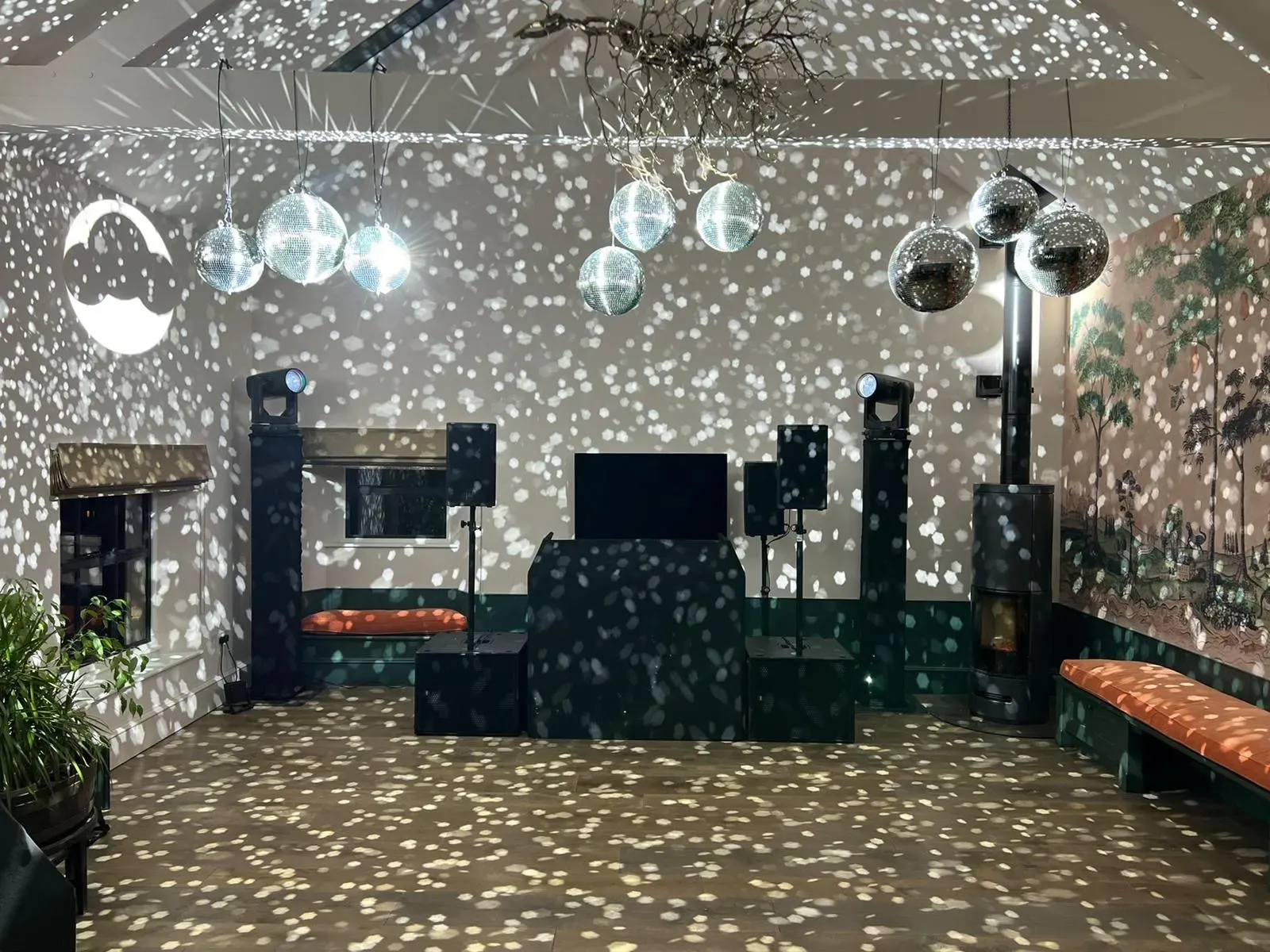
Dry hire and full production are often presented as a single spectrum with a price line dividing them, but they are really two different purchases. Dry hire is equipment, collected or delivered, without operators or responsibility for the outcome. Full production is a managed outcome — equipment, crew, show-calling, risk, and the promise that the event runs. Choosing between them is not about budget in the first instance; it is about who owns the result on the night. This piece sets out when each serves the organiser, and the middle ground where most premium events actually sit.
What dry hire actually is
Dry hire is a commercial transaction in which the organiser rents equipment for a period and returns it in working order. The supplier provides the kit and usually a delivery and collection. They do not provide operators, they are not responsible for the show running, and their warranty is on the equipment, not the event. Within that envelope, dry hire is efficient — the organiser is paying only for the equipment hours they need.
Dry hire works well when there is already an in-house technical team, when the show is simple enough that operators are not required (recorded music through a small PA, basic uplighting), or when the organiser has a clear picture of what they want and is confident in running it themselves.
- Corporate AGMs in venues with in-house AV teams
- Recurring internal events where the team has built up its own playbook
- Small private parties where a DJ brings their own sound
- Rehearsals and test days ahead of a larger production
What full production actually is
Full production is a managed service. The production company designs the event's technical spine, sources the equipment, supplies the crew, runs the show on the night, and takes responsibility for the outcome. The organiser briefs and approves; the production company delivers. The price reflects not just the kit but the design hours, rehearsal, project management, show-calling and the risk the production company is taking on.
Full production makes sense when the event has a moment — a reveal, a speech, a performance — that needs to land precisely, when the creative brief exceeds what in-house kit can deliver, or when the organiser's time is better spent on guests and stakeholders than on a lighting console.
A useful test: if the event has a moment that the host or CEO will remember for a year, full production is usually the right call. If the event is a repeat of one that already runs cleanly in-house, dry hire is usually fine.
The middle ground: crewed hire
Between pure dry hire and full production sits a middle ground: crewed hire, sometimes called supported hire. The organiser rents the equipment and, separately, books operators for specific roles — a sound engineer, a lighting operator, a rigger. The production design and show-calling sit with the organiser or their event manager; the operators execute the parts of the show they are booked for.
Crewed hire is a reasonable choice when the organiser has strong internal project management but not deep technical expertise. It is less common than it used to be because the coordination burden falls on the organiser — scheduling crew calls, briefing operators, chairing the pre-show meeting — and many organisers prefer to hand that off.
What actually drives the decision
Three questions settle most dry-hire vs full-production decisions. First: who runs the show on the night? If the answer is the organiser's in-house team, dry hire is viable. If the answer is the venue's in-house team, check what that team actually does — many venue teams do basic sound and lighting but not show-calling. If the answer is nobody yet, full production is the honest answer.
Second: what is the cost of a visible mistake? For an internal staff event, a dropped mic is embarrassing but recoverable. For a product launch with press in the room, it can undo months of campaign work. The bigger the stakes, the stronger the case for full production — not because the kit is better, but because the accountability is in one place.
Third: how much of the organiser's attention can the event have? Full production frees the organiser to be a host. Dry hire asks the organiser to be a technical lead as well as a host. For events where the organiser needs to be with guests, clients or speakers, the time saved by full production often outweighs the cost difference.
- Who runs the show on the night — not who owns the kit?
- What is the cost of a visible mistake to the organisation?
- How much of the organiser's attention can be spent on AV, realistically?
- Is the creative brief within what the in-house team has delivered before?
- Is there rehearsal time, and who runs it?
Honest cost comparison
On the same nominal equipment list, dry hire is often 40-60% cheaper than full production. That gap looks like an easy win on a spreadsheet and is the reason dry hire is sometimes chosen for the wrong events. The gap narrows quickly once the organiser adds the in-house time to run the event, the risk of a mistake, and the value of a show-caller who has done this before. For a one-off premium event, the full-production number is often better value; for a recurring internal format with a trained team, dry hire usually wins.
The honest answer for most organisers planning a premium event once or twice a year is full production. The honest answer for internal teams running monthly town halls is dry hire or a long-term managed contract. The unhelpful answers are the ones where a premium event tries to save 40% with dry hire and discovers the cost of that choice on the night, or a routine internal event pays for full production it does not need.
Hybrid approaches and long-term partnerships
The binary framing — dry hire or full production — is a useful starting point but rarely the final answer for organisations that run events regularly. A more durable pattern is a long-term production partnership: the same company on a retainer or preferred-supplier basis, holding the institutional memory between events, running the big-stakes work as full production and the routine work as supported hire. The cost saving is real, but the bigger gain is the reduced coordination load on the in-house team.
For organisations that do not run events often enough to justify a retainer, the next best pattern is to work with the same production partner repeatedly on an event-by-event basis. The second event with a given partner is easier than the first, the third is easier than the second. Familiarity with the venue, the brand guidelines and the decision-makers compounds — and the quality of the output tends to rise without the budget rising with it.
The case for full production is strongest on the first event with a new partner. The case for dry hire or supported hire grows once the institutional knowledge is in place. Plan for the relationship, not just the next event.